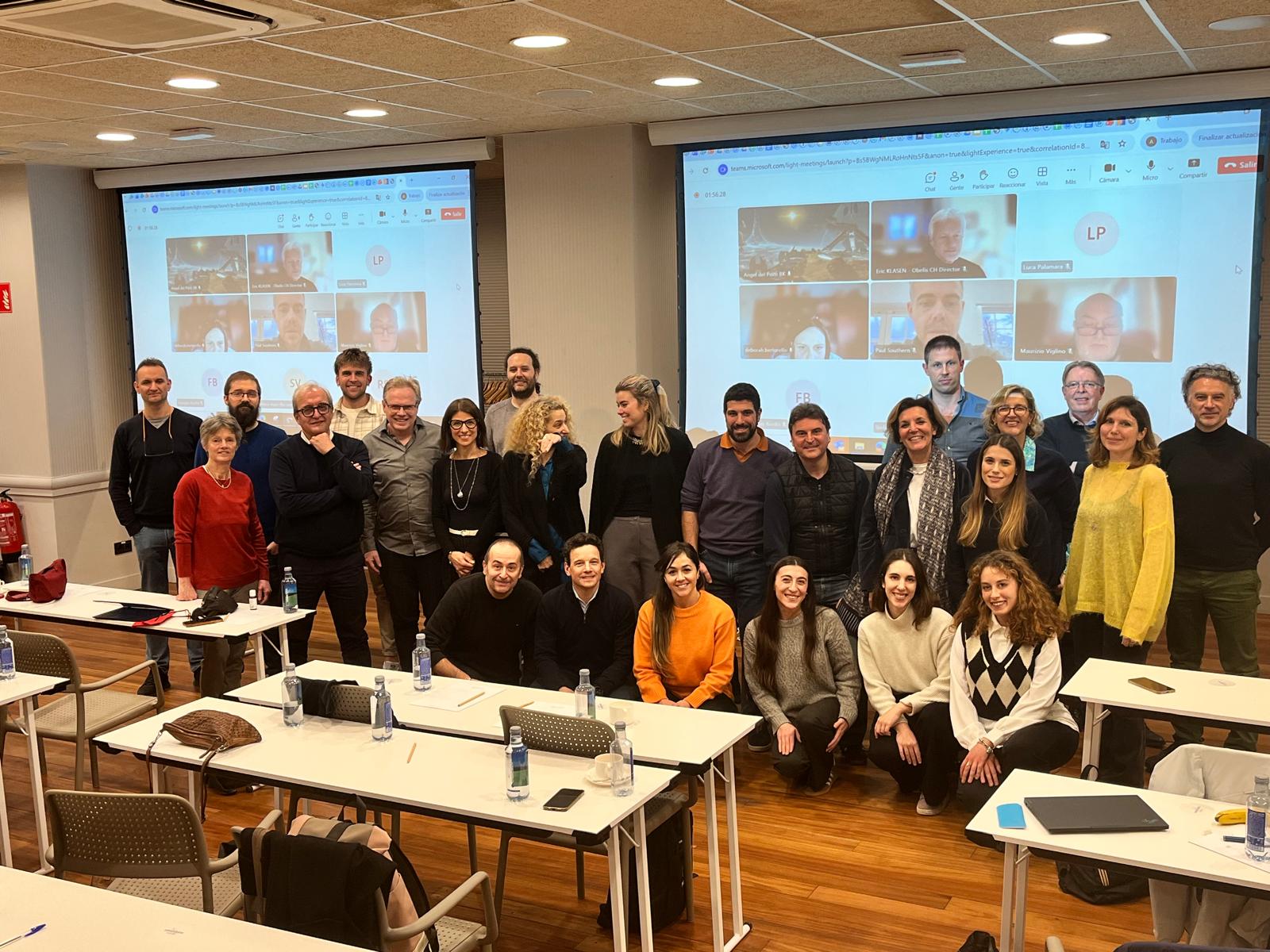
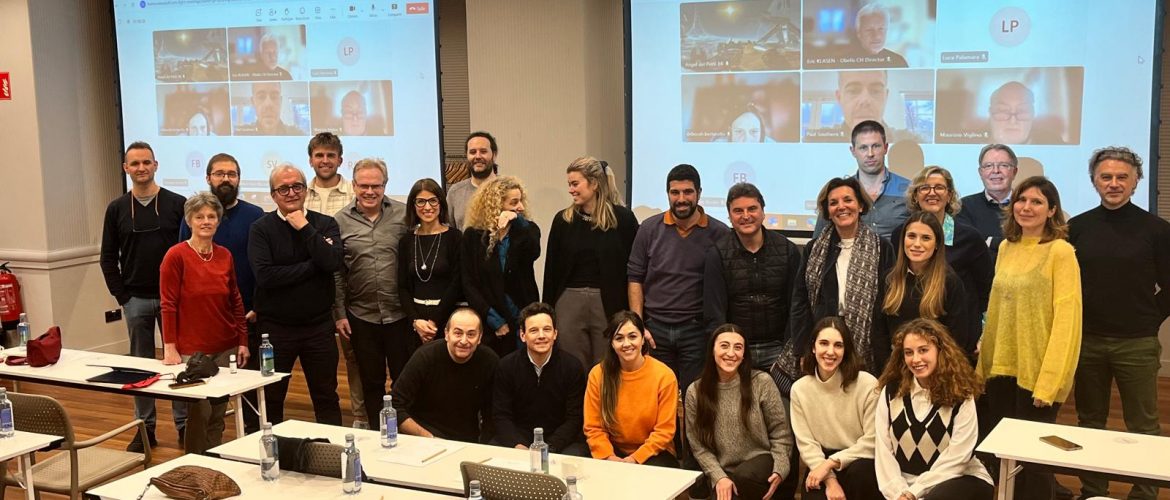
Biokeralty organizes the six-month follow-up meeting of the European TEN4CARE project in Bilbao
Biokeralty Research Institute hosted the second plenary meeting of the TEN4CARE consortium, a strategic initiative funded by the Horizon Europe program that seeks to revolutionize tendon repair through regenerative medicine solutions. During two days of intense face-to-face work, representatives of the 16 partners from Italy, the United Kingdom, Portugal, Belgium, Ireland, Germany, and Spain gathered in Bilbao to evaluate the progress of the first semester of the project.
The event opened with an institutional welcome from Ángel del Pozo (Biokeralty) and Giuseppina Sandri (UNIPV), the institution coordinating the project. The technical agenda focused on reviewing the milestones achieved in the design and simulation of biomaterials (WP1), the in situ synthesis of magnetic nanoparticles (WP2), and the development of 4D hydrogel scaffolds with shape memory (WP3).
A highlight of the meeting was the presentation of physical samples of the materials and prototypes developed, which allowed the experts to visualize the tangible advances in the manufacture of the fibers and scaffolds. The physical-chemical characterization protocols for the materials, led by Trinity College Dublin (WP4), were also discussed, as they are essential for ensuring the quality of the future medical device.
In addition to scientific advances, the partners delved into the commercial exploitation strategy (WP10) and plans for patient and civil society participation (WP11), areas where Biokeralty plays a leading role in dissemination and stakeholder management.
As Project Manager of TEN4CARE, Biokeralty also led the strategic sessions on consortium management under the Lump Sum funding model, reinforcing technical and administrative coordination aimed at excellence. With this meeting in Bilbao, the project consolidates its path towards the development of a minimally invasive therapy that reduces the healing time of tendon injuries and improves the quality of life of thousands of citizens.
This project has received funding from the European Union’s Horizon Europe research and innovation program under grant agreement No. 101178590.